
AED Defibrillators for Workplaces and Public Spaces
Reliable AED Defibrillators for Emergency Preparedness
A sudden cardiac arrest can happen without warning, making access to an automated external defibrillator (AED) an important consideration for workplaces, schools, sporting clubs and public facilities. Having an AED defibrillator nearby can help people respond quickly while waiting for emergency services to arrive.
HeartSine provides compact, portable AED defibrillators designed to support emergency response when every second matters. With straightforward instructions and practical features, HeartSine defibrillators help guide users through the steps involved when responding to a suspected cardiac arrest.
Whether you are equipping a workplace, upgrading your existing emergency equipment or looking for a defibrillator for a community organisation, choosing the right AED is an important step towards improving emergency preparedness.
What Is an AED and What Does It Do?
An AED, or automatic external defibrillator, is a portable medical device used to help someone experiencing sudden cardiac arrest. Cardiac arrest occurs when the heart’s electrical activity becomes disrupted, preventing it from pumping blood effectively.
AED defibrillators are designed to analyse the heart’s rhythm and determines whether an electrical shock is advised. When appropriate, the shock can help restore an effective heart rhythm. The device provides voice prompts and visual instructions to guide the user through the process.
These defibrillators are built to be used by members of the public, including people without extensive medical training. However, they should be used alongside CPR and emergency assistance, not as a replacement for either.
If someone collapses and is unresponsive and not breathing normally, call 000 immediately, begin CPR and use an available AED as soon as possible. Follow the device’s instructions and the emergency operator’s guidance.
Choosing the Right AED Defibrillator for Your Needs
Different environments have different requirements when it comes to emergency equipment. A small business may need a compact AED that is easy to access, while a busy sporting facility may prioritise durability and features that support CPR.
HeartSine offers several AED models to suit different settings, including the 350P, 360P and 500P defibrillators. Depending on the model, features include automatic or semi-automatic shock delivery, voice prompts, CPR rate guidance and protection against dust and water.
When selecting an AED defibrillator, consider where it will be installed, who may need to use it and how easily it can be accessed during an emergency. Battery and electrode replacement requirements should also be considered to help keep the device ready for use.
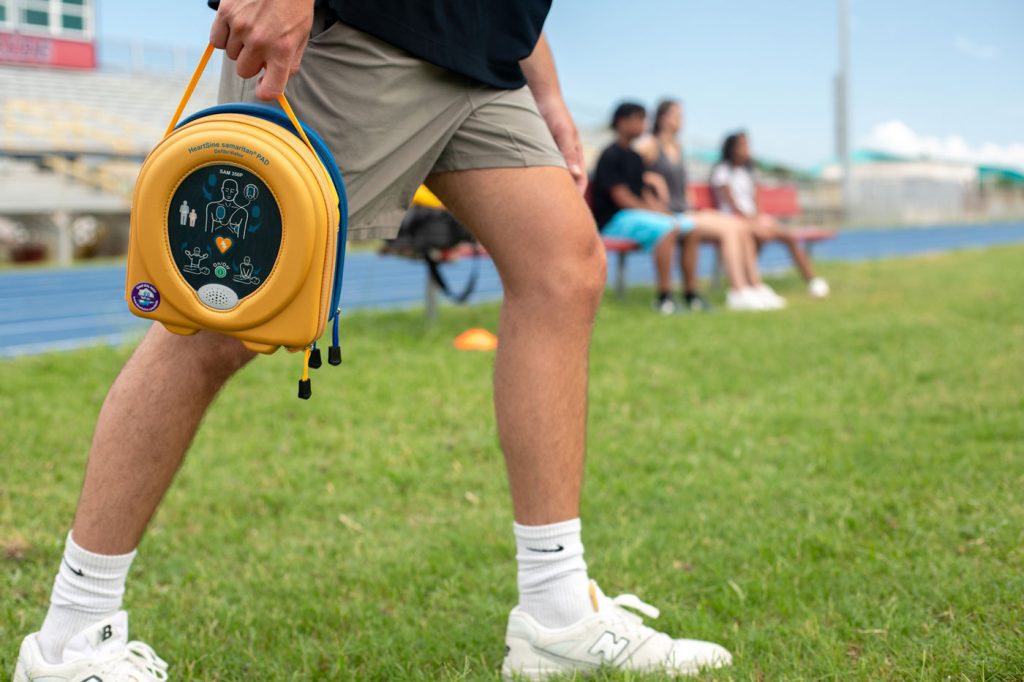
Why Choose A HeartSine AED Defibrillator?
HeartSine defibrillators combine portable designs with features intended to make emergency response more straightforward. Their compact construction makes them suitable for a range of environments, while built-in self-testing helps monitor device readiness.
Selected models also provide CPR coaching to help guide the rate of chest compressions during resuscitation. These features can offer practical support to people responding to a stressful situation.
Regular checks remain important, including confirming that the AED is accessible, inspecting its status indicator and checking battery and electrode expiry dates in accordance with the manufacturer’s instructions.
Find the Right AED Defibrillator
Having an AED available can help your organisation prepare for a cardiac emergency. From workplaces and schools to sporting clubs and community facilities, the right defibrillator can be an important part of your emergency response plan.
Explore the HeartSine AED range to compare available models and find a solution best suited to your environment. If you need help deciding which automatic external defibrillator is right for your needs, get in touch with the team for further information.