
Articles & Guides
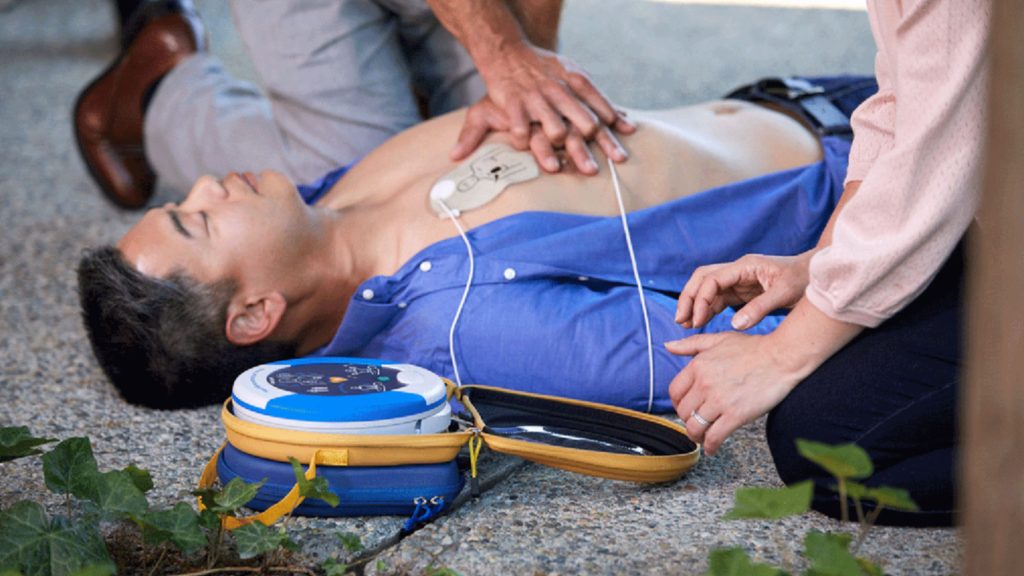
HeartSine Defibrillator: Complete Australian Guide to the 350P, 360P, 500P and Pad-Pak
HeartSine defibrillators have been widely installed across Australian workplaces, schools, sporting clubs, community facilities, vehicles, caravan parks and public-access locations.
The HeartSine defibrillator range is best known for its compact design and combined battery-and-electrode cartridge, called a Pad-Pak. The most common Australian models are the HeartSine samaritan PAD 350P, HeartSine samaritan PAD 360P and HeartSine samaritan PAD 500P defibrillators.
The FAQ below explain:
- – The differences between HeartSine defibrillator models
- – How a HeartSine defibrillator Pad-Pak works
- – Battery and electrode replacement requirements
- – Adult and paediatric operation
- – Maintenance and readiness checks
- – Australian product alerts and recalls
- – HeartSine defibrillator availability in Australia
- – When an older HeartSine defibrillator should be replaced
- – How HeartSine defibrillators compare with newer AED options
Information about recalls, consumables and product availability can change. HeartSine defibrillator owners should always check the serial number, Pad-Pak details and current manufacturer instructions applying to their particular device.
What is a HeartSine defibrillator?
The three commonly encountered HeartSine defibrillator models are the 350P, 360P and 500P.
HeartSine 350P defibrillator
Operation: Semi-automatic
Main Feature: Responder presses the shock button when instructed
HeartSine 360P defibrillator
Operation: Fully Automatic
Main Feature: Delivers the shock automatically after warning everyone to stand clear
HeartSine 500P defibrillator
Operation: Semi-automatic
Main Feature: Includes CPR Advisor feedback for compression rate and force
All three HeartSine defibrillators are designed for public-access use and operate using the HeartSine Pad-Pak system.
Product configurations, accessories, connectivity and Australian availability can vary.
What does HeartSine samaritan PAD mean?
HeartSine samaritan PAD is the official name of the HeartSine public-access defibrillator family.
In this context, PAD means “Public Access Defibrillator”. It does not refer only to the adhesive electrode pads.
The principal models found in Australia include:
Which HeartSine defibrillator models are available in Australia?
HeartSine samaritan PAD is the official name of the HeartSine public-access defibrillator family.
In this context, PAD means “Public Access Defibrillator”. It does not refer only to the adhesive electrode pads.
The principal models found in Australia include:
What is the difference between the HeartSine 350P and 360P defibrillators?
The principal difference is how the shock is delivered.
HeartSine 350P defibrillator
The HeartSine 350P is a semi-automatic defibrillator.
When the HeartSine 350P defibrillator detects a shockable rhythm, it charges and tells the responder to press the illuminated shock button. The shock cannot be delivered unless the defibrillator has analysed the casualty and determined that a shock is appropriate.
HeartSine 360P defibrillator
The HeartSine 360P is a fully automatic defibrillator.
Is the HeartSine 350P or HeartSine 360P defibrillator better?
Both HeartSine defibrillators are designed to provide safe public-access defibrillation. The best model depends on the environment, responder training and organisational preference.
A semi-automatic HeartSine 350P defibrillator gives the responder control over the final moment of shock delivery. This allows the responder to visually confirm that nobody is touching the casualty before pressing the shock button.
A fully automatic HeartSine 360P defibrillator removes the need to press a shock button. However, responders must still follow the prompts and stand clear when the defibrillator warns that a shock is about to be delivered.
For larger organisations, consistency across every location can be particularly important. Having the same HeartSine defibrillator model throughout a fleet can simplify staff training, maintenance and consumable management.
What is different about the HeartSine 500P defibrillator?
The HeartSine 500P defibrillator is a semi-automatic AED with integrated CPR Advisor technology.
In addition to analysing the casualty’s heart rhythm and providing defibrillation, the HeartSine 500P defibrillator gives visual and verbal feedback about the rate and force of chest compressions.
Its CPR instructions may include guidance to:
- – Push faster
- – Push slower
- – Push harder
Continue compressions
The HeartSine 500P defibrillator obtains its CPR feedback through the electrode pads rather than requiring a separate compression puck or accelerometer.
CPR feedback can assist a responder, but it does not replace CPR or first-aid training. Responders should continue following Triple Zero instructions and the HeartSine defibrillator’s prompts.
How easy is a HeartSine defibrillator to use?
HeartSine defibrillators are designed for public-access use, including use by people without advanced medical qualifications.
The general rescue process is:
1. Make sure the area is safe.
2. Check whether the casualty responds and is breathing normally.
3. Call Triple Zero (000) and request an ambulance.
4. Begin CPR.
5. Send someone to retrieve the HeartSine defibrillator.
6. Switch on the HeartSine defibrillator.
7. Expose and prepare the casualty’s chest.
8. Remove the electrode pads from the Pad-Pak.
9. Apply the pads as shown in the diagrams.
10. Follow the voice and visual instructions.
11. Stand clear while the HeartSine defibrillator analyses the heart rhythm.
12. Deliver the shock when instructed, or allow a fully automatic model to deliver it.
13. Resume CPR immediately when instructed.
14. The HeartSine defibrillator will only advise or deliver a shock when it identifies a suitable shockable rhythm.
Can an untrained person use a HeartSine defibrillator?
Yes. A HeartSine defibrillator is designed to guide a member of the public through treatment using voice prompts and visual instructions.
Formal training is still recommended because it can:
- – Increase responder confidence
- – Reduce hesitation
- – Improve CPR performance
- – Familiarise staff with the HeartSine defibrillator
- – Help staff retrieve and prepare the AED more quickly
- – Clarify the responsibilities of different responders
A person should not delay using an available HeartSine defibrillator simply because they have not completed formal training. Call Triple Zero, commence CPR and follow the defibrillator’s instructions.
Can a HeartSine defibrillator shock someone who does not need it?
A HeartSine defibrillator analyses the casualty’s heart rhythm before a shock can be delivered.
If the heart rhythm is not considered shockable, the HeartSine defibrillator will not authorise a shock. On a semi-automatic HeartSine defibrillator, pressing the shock button will not deliver a shock unless the AED has already advised one.
Not every person in cardiac arrest requires a shock. Some cardiac arrest rhythms require continued CPR and professional medical treatment rather than defibrillation.
What is a HeartSine defibrillator Pad-Pak?
The HeartSine Pediatric-Pak is a dedicated battery-and-electrode cartridge designed to reduce the energy delivered to a young child.
According to the manufacturer’s specifications, the paediatric shock sequence is 50 joules.
The Pediatric-Pak is generally intended for a child aged one to eight years who weighs less than 25 kilograms. Owners and responders must follow the current instructions supplied with the HeartSine defibrillator and cartridge.
Can HeartSine defibrillator adult pads be used on a child?
The dedicated Pediatric-Pak should be used when treating a child who meets the manufacturer’s paediatric criteria, provided it is immediately available.
If a paediatric cartridge is unavailable during a life-threatening emergency, do not unnecessarily delay CPR or defibrillation. Follow Triple Zero instructions, current Australian resuscitation guidance and the HeartSine defibrillator’s directions.
If the electrode pads would touch each other on a small child’s chest, placement may need to be changed. This generally involves placing one pad on the chest and the other on the back.
Does a HeartSine defibrillator have an adult-to-child switch?
The commonly used HeartSine 350P, 360P and 500P defibrillators do not change between adult and paediatric modes using a simple switch while retaining the same installed adult pads.
A separate Pediatric-Pak must generally be installed to provide reduced paediatric energy.
Locations responsible for young children should therefore consider:
- – Purchasing a separate Pediatric-Pak
- – Monitoring its separate expiry date
- – Storing it with the HeartSine defibrillator
- – Making sure staff know how to identify it
- – Training staff to change cartridges
- – Ensuring it is not confused with the adult Pad-Pak
- – Including both cartridges in routine inspections
This is an important ownership consideration for childcare centres, schools, family facilities and community organisations.
What energy does a HeartSine defibrillator deliver?
Manufacturer specifications for an adult HeartSine defibrillator Pad-Pak list the following escalating sequence:
- – First shock: 150 joules
- – Second shock: 150 joules
- – Third shock: 200 joules
For the HeartSine Pediatric-Pak, the listed sequence is:
- – First shock: 50 joules
- – Second shock: 50 joules
- – Third shock: 50 joules
HeartSine defibrillators use a biphasic waveform that adjusts certain waveform characteristics according to the casualty’s impedance.
Energy should not be the only factor used to compare defibrillators. Buyers should also consider:
- – Rescue workflow
- – CPR instructions
- – Paediatric operation
- – Maintenance requirements
- – Consumable availability
- – Remote monitoring
- – Warranty
- – Technical support
- – Total ownership cost
Is a HeartSine defibrillator waterproof?
HeartSine 350P and HeartSine 360P defibrillator specifications include an IP56 environmental rating.
Broadly, this indicates a strong level of protection against dust ingress and powerful water jets under controlled testing conditions. It does not mean the HeartSine defibrillator can be submerged or left permanently exposed to Australian weather.
A HeartSine defibrillator should still be:
- – Stored within its specified temperature range
- – Kept away from direct weather exposure
- – Protected in a suitable cabinet or carry case
- – Inspected regularly
- – Positioned where it remains accessible
- – Protected from excessive moisture, salt, dust and heat
Outdoor AED cabinets should be selected according to the actual site conditions.
Can a HeartSine defibrillator be stored in a vehicle?
A HeartSine defibrillator can be transported in a vehicle, but temperature exposure must be carefully managed.
The manufacturer lists an operating and standby temperature range of approximately 0°C to 50°C for commonly used HeartSine defibrillators. Australian vehicles can exceed 50°C when parked in direct sunlight.
Excessive heat or cold may affect:
- – Battery performance
- – Electrode adhesive
- – Conductive gel
- – Pad-Pak shelf life
- – Device readiness
- – The HeartSine defibrillator’s ability to operate correctly
A vehicle AED should be positioned away from direct sunlight and included in a documented inspection program.
For large fleets, remote readiness monitoring and temperature alerts may provide advantages over manual checking alone.
What maintenance does a HeartSine defibrillator require?
HeartSine defibrillators perform automatic internal checks, but they still require regular visual inspection and documented maintenance.
A HeartSine defibrillator check should include:
- – Confirming that the status indicator is flashing green
- – Turn on the device and wait for the first instruction
- – Checking for beeping or warning messages
- – Confirming the Pad-Pak is correctly installed
- – Checking the adult Pad-Pak expiry date
- – Checking the Pediatric-Pak expiry date
- – Inspecting the AED for visible damage
- – Checking the carry case
- – Making sure the rescue kit is complete
- – Confirming scissors and a razor are available
- – Inspecting the cabinet and signage
- – Making sure the AED has not been moved
- – Checking whether access is obstructed
- – Reviewing manufacturer notices and recalls
- – Recording the inspection in an AED register
The person responsible for the HeartSine defibrillator should know what its normal ready indication looks like and what to do when that indication changes.
How often should a HeartSine defibrillator be checked?
Defibrillators Australia recommends a brief visual check at least weekly, supported by a documented maintenance program.
Following an Australian product correction concerning potentially impaired audio prompts, owners of affected HeartSine defibrillators were also instructed to conduct an audio-prompt check every three months.
Owners should consult:
- The applicable HeartSine defibrillator user manual
- The relevant maintenance supplement
- Current Stryker correspondence
- TGA product notices applying to the serial number
Automatic self-testing is valuable, but it cannot identify every possible problem. A self-test may not identify that:
- – The HeartSine defibrillator has been removed
- – The cabinet is inaccessible
- – The rescue kit is missing
- – Signage has been damaged
- – A Pediatric-Pak has expired
- – A product recall has not been actioned
- – The AED has been stored outside an appropriate environment
What does a flashing green light mean on a HeartSine defibrillator?
A flashing green status indicator generally means the HeartSine defibrillator’s internal checks indicate that it is ready for use.
The green status indicator should be observed during every routine inspection.
If the HeartSine defibrillator has:
- – A red status indicator
- – No visible status indicator
- – Continuous beeping
- – A warning prompt
- – Any other unusual indication
it may require immediate attention.
Do not automatically assume that the problem is only a flat battery. Follow the current user instructions and contact an experienced AED supplier or Stryker if required.
Why is my HeartSine defibrillator beeping?
A beeping HeartSine defibrillator may have detected a problem affecting its readiness.
Possible causes include:
- – A low or expired Pad-Pak
- – An incorrectly inserted Pad-Pak
- – A damaged cartridge connector
- – A failed self-test
- – An internal device fault
- – Unsuitable environmental conditions
Check the HeartSine defibrillator’s status indicator and follow the current user manual.
If the problem cannot be resolved immediately, contact your service provider. A temporary replacement AED should be considered so the location is not left without a rescue-ready defibrillator.
A beeping HeartSine defibrillator should never be ignored or placed in storage without investigating the cause.
What happens when a HeartSine defibrillator Pad-Pak expires?
An expired HeartSine defibrillator Pad-Pak must be replaced.
Expired electrode pads may have degraded adhesive or conductive gel, while an ageing battery may not provide the required performance during an emergency.
An expired Pad-Pak means the HeartSine defibrillator should not be treated as confidently rescue-ready.
The expired cartridge should be disposed of according to the manufacturer’s instructions and relevant battery-disposal requirements. It should not be stored with the HeartSine defibrillator as an emergency spare.
Can I replace a HeartSine defibrillator Pad-Pak myself?
Routine HeartSine defibrillator Pad-Pak replacement can generally be completed by the owner or a responsible staff member following the manufacturer’s instructions.
Care must be taken because the cartridge needs to be inserted correctly and its locator pins must not be bent or damaged.
After installing the replacement Pad-Pak:
1. Confirm that the cartridge is fully seated.
2. Allow the HeartSine defibrillator to complete its check.
3. Confirm the correct green-ready indication.
4. Record the new expiry date.
5. Update the AED maintenance register.
6. Check whether the cartridge is included in a current product notice.
7. Retain its batch information and proof of purchase.
If the HeartSine defibrillator does not return to ready status, contact the supplier before placing it back into service.
Are HeartSine defibrillator Pad-Paks interchangeable between models?
The standard HeartSine defibrillator Pad-Pak is used across several samaritan PAD models, including many HeartSine 350P, 360P and 500P defibrillators.
Compatibility should still be confirmed against:
- – The exact HeartSine defibrillator model
- – The cartridge catalogue number
- – The device’s operating instructions
- – Australian regulatory requirements
- – Current manufacturer advice
Older and discontinued HeartSine defibrillators may have different compatibility or support arrangements. Never assume that a cartridge is suitable simply because it looks similar to the existing cartridge.
What is PAD-PAK-03?
PAD-PAK-03 is a commonly encountered adult HeartSine defibrillator battery-and-electrode cartridge in Australia.
HeartSine has used different Pad-Pak catalogue numbers for particular configurations, markets and applications.
Before ordering, confirm:
- – The catalogue number
- – HeartSine defibrillator compatibility
- – Remaining shelf life
- – Australian supply status
- – Product-alert status
- – Physical stock availability
The Pad-Pak catalogue number, expiry date and lot number may each be relevant when checking recall or product-correction notices.
How much does a HeartSine defibrillator replacement Pad-Pak cost?
HeartSine defibrillator Pad-Pak pricing varies according to stock availability, remaining shelf life, model compatibility and supplier.
When comparing prices, ask whether the quotation includes:
- – GST
- – Freight
- – Installation
- – Remaining shelf life
- – Inspection of the HeartSine defibrillator
- – Product-notice and recall checking
- – Disposal of the expired cartridge
- – Updating the service record
- – Post-use support
Because the HeartSine defibrillator battery and pads are combined, the correct comparison is not simply the cost of HeartSine pads versus another brand’s pads. The complete battery-and-electrode cost should be compared across the expected ownership period.
Are HeartSine defibrillator Pad-Paks available in Australia?
HeartSine defibrillator Pad-Pak supply has experienced periods of disruption and limited availability in Australia.
Availability can change. An online product listing should not automatically be treated as confirmation that a supplier physically holds stock.
Before ordering a HeartSine defibrillator Pad-Pak, ask the supplier to confirm:
- – The item is physically in stock
- – The exact catalogue number
- – The printed expiry date
- – Whether the cartridge is affected by a product notice
- – Expected dispatch time
- – Whether the order is being placed on backorder
If an installed HeartSine defibrillator Pad-Pak is approaching expiry and replacement stock cannot be confirmed, replacing the AED may be safer than allowing the location to remain without a rescue-ready defibrillator.
Are new HeartSine defibrillators currently available in Australia?
Availability of new HeartSine defibrillators and replacement consumables has varied in Australia.
Customers should obtain written confirmation of stock and delivery timeframes before relying on a HeartSine defibrillator quotation for a new installation or urgent replacement program.
For organisations purchasing a large fleet, long-term access to replacement consumables is an important procurement consideration.
Have HeartSine defibrillators been recalled in Australia?
Yes. Certain HeartSine defibrillators and Pad-Paks have been subject to Australian recalls, product corrections or product alerts.
This does not mean every HeartSine defibrillator is affected. A product action may apply only to particular:
- – Models
- – Serial numbers
- – Manufacturing periods
- – Catalogue numbers
- – Pad-Pak lot numbers
- – Pad-Pak expiry dates
Owners must check their individual HeartSine defibrillator and Pad-Pak rather than relying only on the model name.
What was the 2025 HeartSine defibrillator recall?
In June 2025, the TGA published an urgent recall affecting certain HeartSine 350P, 360P and 500P defibrillator serial numbers.
The notice concerned a manufacturing problem associated with a circuit-board component. According to the TGA, the issue could impair the HeartSine defibrillator’s ability to function while holding a charge, including before, during or after shock delivery.
If the failure occurred, the HeartSine defibrillator could become inoperable.
The recall did not apply to every HeartSine defibrillator. Owners need to compare the complete serial number against the affected list or use Stryker’s serial-number checking process.
The TGA HeartSine defibrillator recall notice contains the authoritative Australian information.
How do I know whether my HeartSine defibrillator is affected by a recall?
You will generally need:
- – The HeartSine defibrillator model
- – The complete AED serial number
- – The Pad-Pak catalogue number
- – The Pad-Pak lot or batch number
- – The Pad-Pak expiry date
Do not check only the first few serial-number digits and assume the HeartSine defibrillator is unaffected. Some product actions apply to subsets within broader serial-number ranges.
If you cannot confidently determine the result, photograph the AED label and Pad-Pak information and send them to an experienced service provider or Stryker.
Keep a written record of:
- – The date of the check
- – The information reviewed
- – The person completing the check
- – The result
- – Any corrective action taken
Where is the serial number on a HeartSine defibrillator?
The serial number is generally located on a label attached to the rear or underside of the HeartSine defibrillator.
You may need to remove the HeartSine defibrillator from its carry case to see the label.
Do not confuse:
- – The AED serial number
- – The HeartSine defibrillator model number
- – The Pad-Pak catalogue number
- – The Pad-Pak lot number
- – The Pad-Pak expiry date
Each number can be relevant to a different recall or product correction.
Should a recalled HeartSine defibrillator be removed from service?
Follow the exact instructions in the TGA or manufacturer notice applying to that HeartSine defibrillator.
Some product actions may instruct owners to keep an AED in service while corrective action is arranged, especially where no replacement AED is immediately available. Other notices may require inspection, component replacement or removal from service.
Do not make the decision based only on an old email, online forum or social-media post. Check the current official instructions against the exact serial number and Pad-Pak details.
Where possible, an affected site should have uninterrupted access to an operational replacement AED while the issue is being resolved.
Should a recalled HeartSine defibrillator be removed from service?
Replacing a HeartSine defibrillator may be appropriate when:
- – Out of warranty
- – The AED is affected by an unresolved recall
- – A replacement Pad-Pak cannot be obtained before expiry
- – The HeartSine defibrillator is outside warranty
- – It repeatedly fails its readiness checks
- – Repair is not economical
- – The organisation requires cellular monitoring
- – The AED is located in a remote vehicle
- – The site regularly accommodates young children
- – The organisation wants adult/child mode without changing cartridges
- – Standardising a mixed AED fleet would simplify training
- – Supporting the old device approaches the cost of a new AED
A functioning HeartSine defibrillator with in-date consumables does not automatically require replacement simply because a newer model is available.
The decision should consider readiness, warranty, consumable availability, site risk and total ownership cost.
Can I trade in an old HeartSine defibrillator?
Defibrillators Australia may offer trade-in options for eligible HeartSine defibrillators when upgrading to a supported current model.
A HeartSine defibrillator trade-in can help organisations address:
- – Ageing AEDs
- – Pad-Pak availability difficulties
- – Recall-affected equipment
- – Multiple AED models across different sites
- – Separate paediatric cartridge requirements
- – Lack of remote monitoring
- – Increasing maintenance costs
Trade-in eligibility and value depend on the HeartSine defibrillator’s model, age, condition, serial number and the promotion available at the time.
What are the alternatives to a HeartSine defibrillator?
Alternatives to a HeartSine defibrillator available in Australia include models from LIFEPAK CR2
The best replacement depends on the location and use case.
Important factors include:
- – Adult and paediatric operation
- – Battery life
- – Electrode shelf life
- – Shock-energy protocol
- – CPR coaching
- – Semi-automatic or fully automatic operation
- – IP rating
- – Warranty
- – Wi-Fi or cellular monitoring
- – Consumable availability
- – Post-use support
- – Total ownership cost over eight to ten years
For organisations replacing a HeartSine defibrillator, the LIFEPAK CR2 is often considered because it offers adult/child mode using the same pads, escalating energy and optional cellular connectivity.
How does a HeartSine defibrillator compare with the LIFEPAK CR2?
Alternatives to a HeartSine defibrillator available in Australia include models from LIFEPAK CR2
The best replacement depends on the location and use case.
Important factors include:
- – Adult and paediatric operation
- – Battery life
- – Electrode shelf life
- – Shock-energy protocol
- – CPR coaching
- – Semi-automatic or fully automatic operation
- – IP rating
- – Warranty
- – Wi-Fi or cellular monitoring
- – Consumable availability
- – Post-use support
- – Total ownership cost over eight to ten years
For organisations replacing a HeartSine defibrillator, the LIFEPAK CR2 is often considered because it offers adult/child mode using the same pads, escalating energy and optional cellular connectivity.